
 Europe Regulatory Services
Our Services Include
- Sterilization Method Selection based on device materials, design, and intended use.
- Sterilization Validation Protocol and Report Preparation.
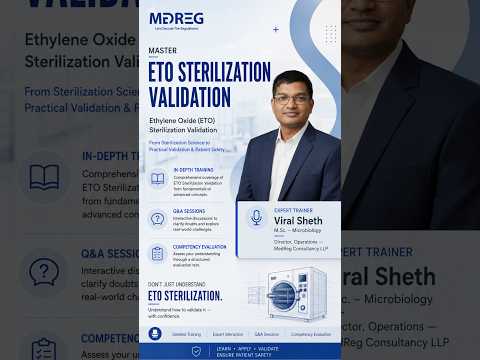
- Ethylene Oxide (EtO) Sterilization Validation as per ISO 11135.
- Radiation Sterilization Validation as per ISO 11137.
- Steam Sterilization Validation as per ISO 17665.
- Sterility Assurance Level (SAL) Establishment and Justification.
- Sterilization Process Parameter Definition and Monitoring.
- Product and Packaging Compatibility Assessment.
- Bioburden Testing Coordination and Evaluation as per ISO 11737-1.
- Sterility Testing Support as per as per ISO 11737-2.
- Revalidation Assessment and Change Impact Evaluation.
What is Sterilization Validation?
Sterilization validation is a systematic and documented process used to demonstrate that a sterilization method can consistently achieve the required level of sterility for a product. It involves scientific studies, testing, and documented evidence to verify that the process reliably attains the specified Sterility Assurance Level (SAL) under defined operating conditions.
Why is Sterilization Validation Important?
Sterilization validation is essential for ensuring: Patient Safety, Regulatory Compliance, Product Quality and Consistency and Process Control and Risk Reduction.
Sterilization Methods
Sterilization is a critical process in the manufacture and reprocessing of medical devices, pharmaceuticals, and healthcare products. The objective of sterilization is to eliminate viable microorganisms and achieve the required level of sterility, thereby ensuring product safety and reducing the risk of infection. Various sterilization methods are available, and the selection of an appropriate method depends on factors such as product design, material compatibility, packaging configuration, and intended use.
An overview of commonly used sterilization methods:
- Steam
- Ethylene Oxide (EtO)
- Radiation
- Dry Heat
- Filtration
- Vaporized Hydrogen Peroxide (VHP)
Key steps in the sterilization planning and validation process include
- Clearly defining the intended purpose and intended use of the medical device, including:
- Expected product lifetime
- Intended users and personnel responsible for sterilization or reprocessing
- Maximum number of allowable reprocessing cycles (where applicable)
- Sterility and performance requirements of the final product
- Selecting an appropriate sterilization method based on the device design, materials, and intended use.
- Establishing critical sterilization process parameters required to achieve the desired Sterility Assurance Level (SAL).
- Evaluating material and product compatibility with the chosen sterilization method to ensure that device safety and performance are not adversely affected.
- Identifying and qualifying a suitable packaging system capable of maintaining sterility throughout storage, transportation, and use.
- Developing and implementing a sterilization validation strategy, including:
- Preparation of a validation plan
- Establishment of the necessary validation infrastructure, equipment, and resources
- Execution of validation activities and testing
- Documentation of results in a comprehensive validation report
How often sterilization validation must be repeated?
Complete revalidation of a sterilization process is not required at fixed intervals; however, it must be performed whenever significant changes to the product, packaging, or sterilization process may affect the validated state. Standards relevant to sterilization method require periodic monitoring to confirm continued process effectiveness.
What is Bioburden Testing?
Bioburden testing is used to determine the number of viable microorganisms, commonly referred to as the Total Viable Count (TVC), present on or within a medical device. It is an important measure of the microbiological cleanliness of both sterile and non-sterile devices, supporting product quality, patient safety, and regulatory compliance. The test is a key requirement of ISO 11737-1:2018 + A1:2021, which specifies methods for estimating microbial populations associated with medical devices.
For devices intended to be supplied sterile, bioburden testing provides essential data for the development, validation, and routine monitoring of sterilization processes. For devices supplied non-sterile, the results help demonstrate compliance with established cleanliness specifications and microbial limits. The testing process typically involves recovering and quantifying microorganisms present on the device to evaluate the effectiveness of manufacturing controls and identify potential sources of contamination. Regular bioburden assessment enables manufacturers to maintain consistent product quality, verify process effectiveness, and ensure continued compliance with applicable regulatory and quality management requirements.
MEDREG support medical device manufacturers in developing and validating sterilization processes to demonstrate sterility assurance, product compatibility, and regulatory compliance.